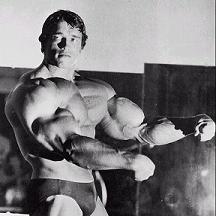
 Too many people these days are not getting the results they want. They spend too much time in the gym socializing and spinning their wheels. If you’re looking for fast results you need to cut out all the bullshit and start pushing some heavy weight. The only way to get bigger and stronger is to add more weight to the bar. Now I don’t mean adding 5 lbs to your preacher curl. I mean training big compound movements that give you fast results. Face it, you’re not Arnold Schwarzenegger, nor should you train like he did. Bodybuilding icons like Arnold and Ronnie Coleman train body part splits because have the ability to attain massive levels of muscle size. Sadly you do not, however this does not mean you should give up.
So how can you build serious muscle in as little as four hours a week? The answer is simple. You are going to perform 3-4 sessions a week, for 45-60 minutes apiece, and train lots of compound movements. I will give you two options here. You will do either 3 full body sessions a week or 2 upper body days and 2 lower body days. Regawrrdless of which spilt you pick, choose no more than 5 movements a session. You are probably saying “what the hell, how are 5 exercises going to get me bigger”. It is all about exercise selection. If you are choosing the right exercises, anymore than 4 is just overkill. Remember the key is progression and you want to leave something in the tank for the next session. Still don’t believe me? Look at the way elite powerlifters and bodybuilders train. They train the shit out of 3-4 exercises and they use $100,000s of steroids a year! Why in God’s world would you train with a higher volume than an elite lifter?
Sample Program

Day 1-Max Effort Upper Body
1) Max Effort Bench Press- Build up to 3 working sets of
your 3-5 rep max.
2A) Incline Dumbbell Press- 4 sets of 8-12 reps
2B) 1 Arm Dumbbell Row
3A) Wide grip Pull-ups 4 sets of submax (leave 1 or 2 in the tank)
3B) Dumbbell Clean- 10-15 reps
 Day 2- Lower Body
1) Front Squats-4 sets of 6(less than 90% of 1RM) Day 2- Lower Body
2) Sandbag Lunges-3-4 sets of 8-12
3) Romanian Deadlifts- 3-4 sets of 10-15
4) Weak Point training-Upper back work
Day 3- Repetition Upper Body

1A) Military Press 4 sets of 6
1B) Close Grip Chin Ups- Submax
2A) Pushup variation- 4 sets of max reps
2B) Recline Row- 4 sets of max reps
3) Face Pulls- 3 sets of 15
Day 4- Max Effort Lower Body

1) Max Effort Trap Bar Deadlift-Build up to 3 working
sets of your 3-5 rep max.
2) Barbell Reverse Lunges- 4 sets of 6-10 reps
3A) Kettlebell Swing- 3 sets of 10-15
3B) Weighted Back Extension
Repeat this same workout for weeks 1-4. Each week you should try to break a record. This could mean adding more weight to your last set, or getting an extra rep or adding another set. The goal is to increase the total amount of lbs for each lift. Week 4 you will deload. In a nutshell, cut all your weight and volume in half. This will allow your body to reload for the next 4 weeks and will also allow you to practice your technique. For weeks 5-8 you are going to use the same template except you are going to choose variations of each lift. If you need help with this, message me and I will personally tell you what to change.
While this program isn’t perfect, it will get you on the right track to adding some serious muscle and strength. I always recommend ending your training with some grip and abdominal work. You can also add some conditioning for 10-15 minutes following your session. The best choices here are sled drags and prowler pushes.
Report back to me in 8 weeks with your progress!
Lift strong,
Joe Meglio
Performance Enhancement Coach


